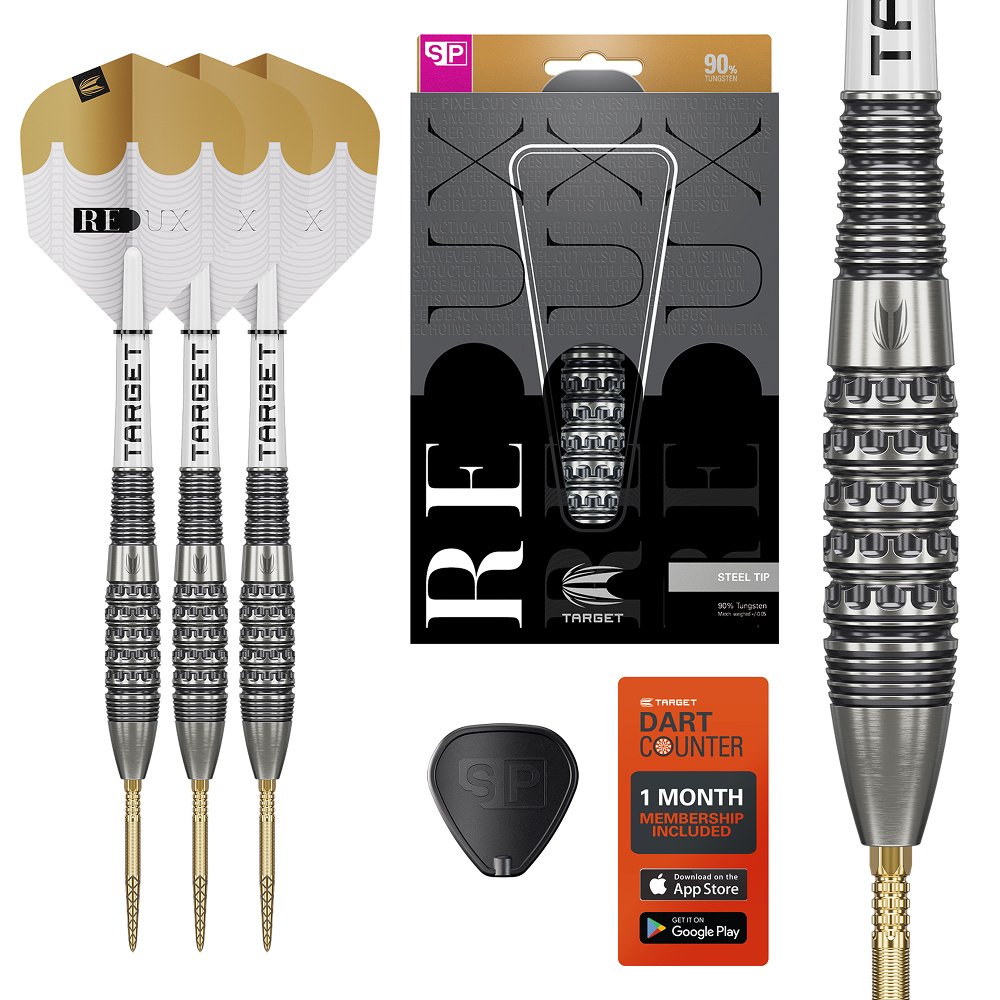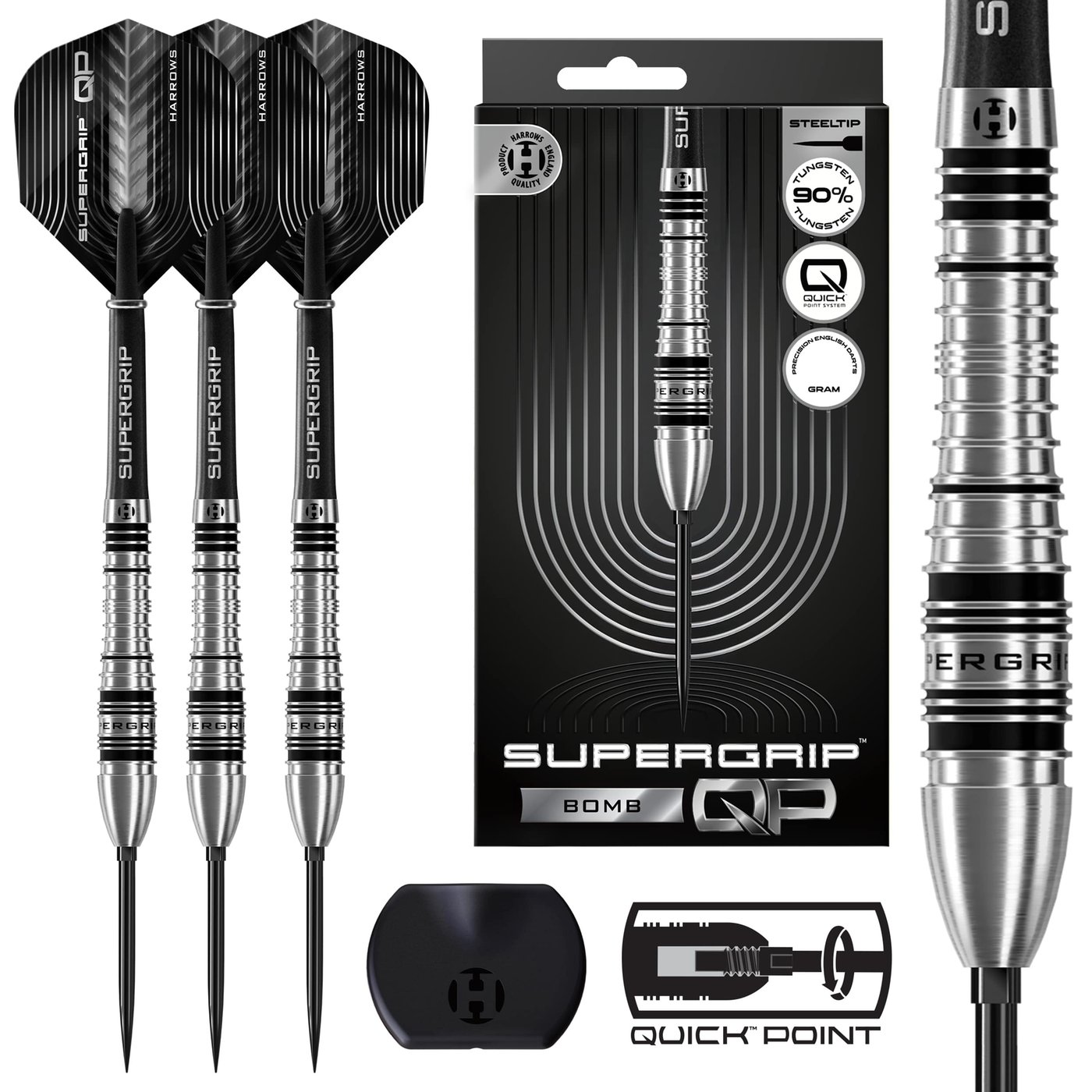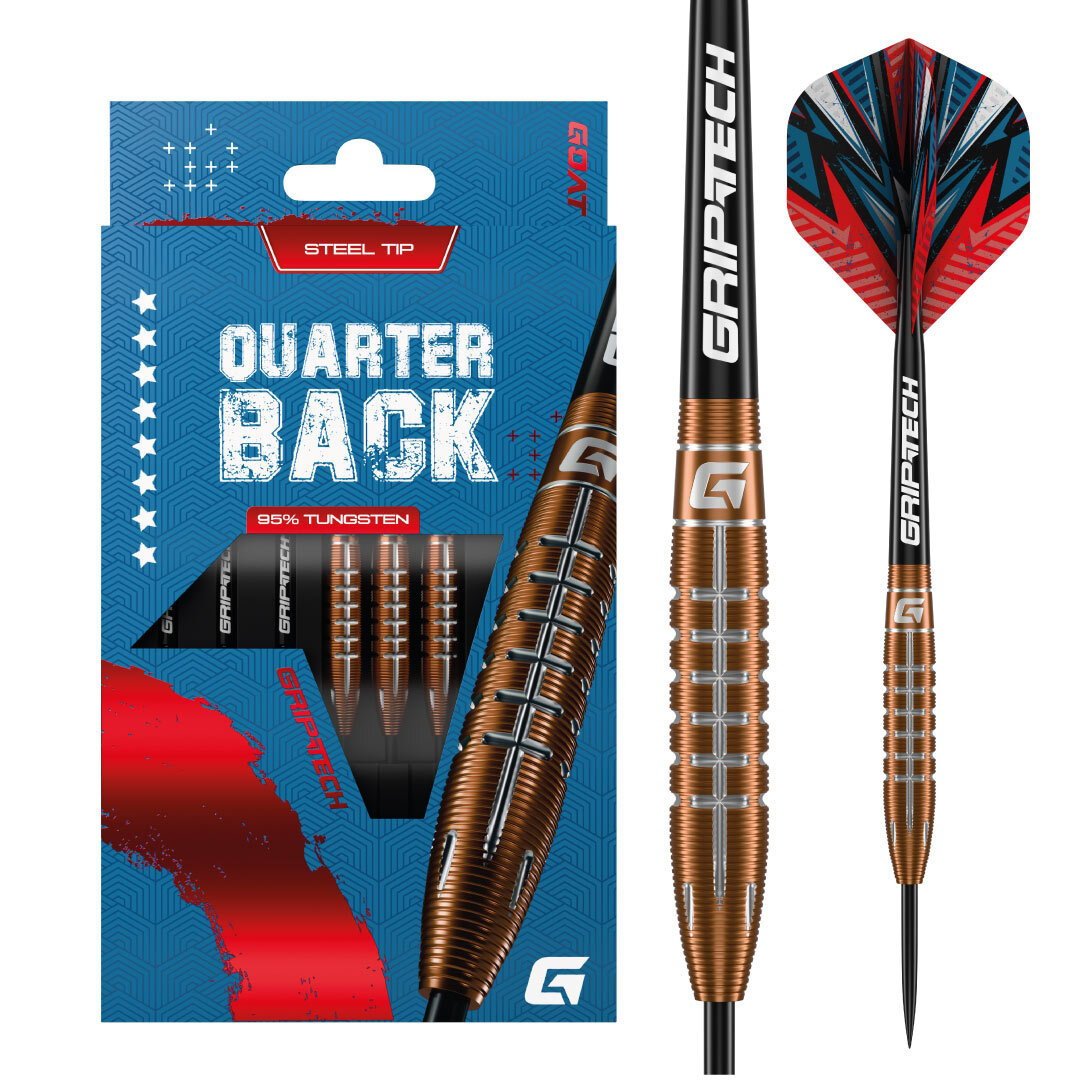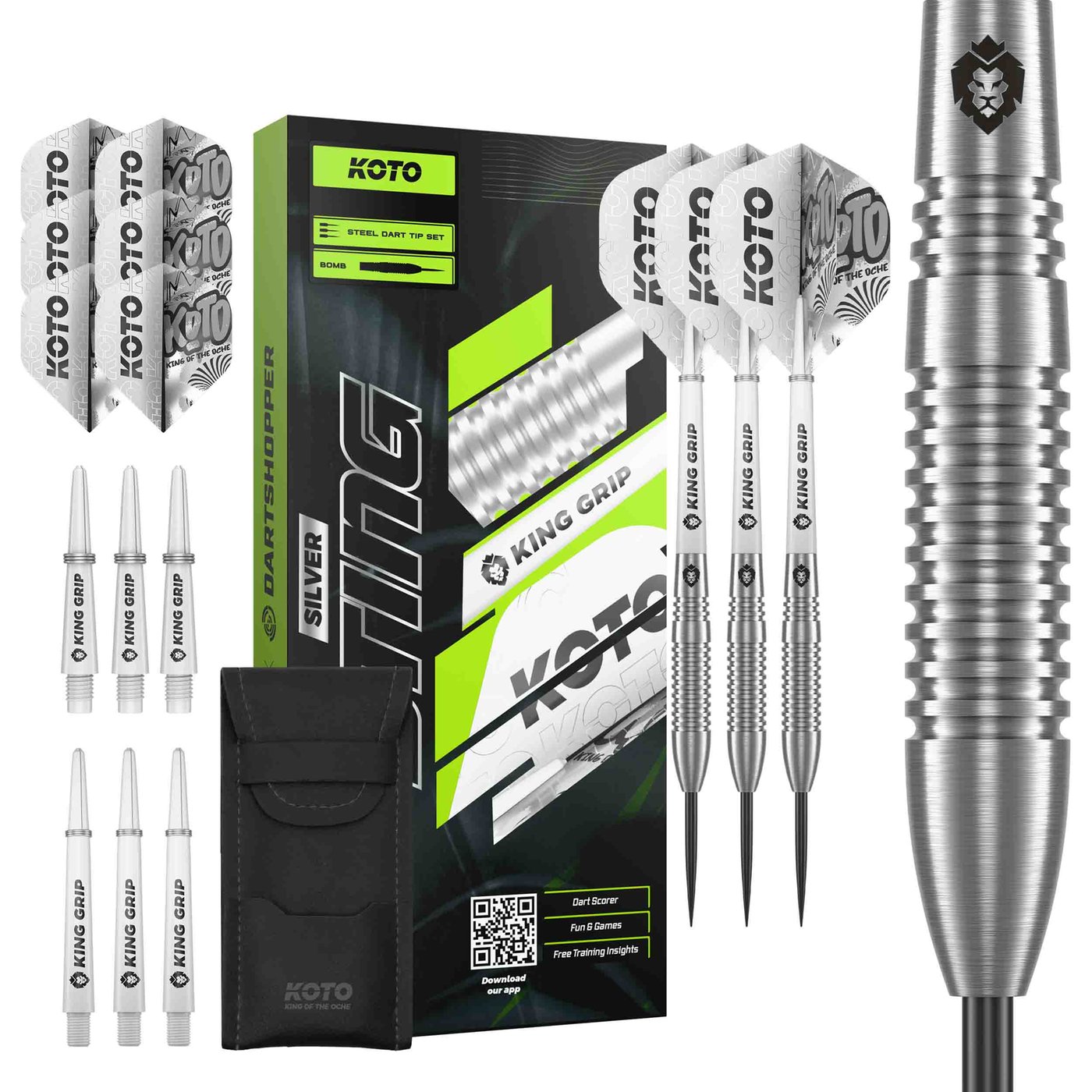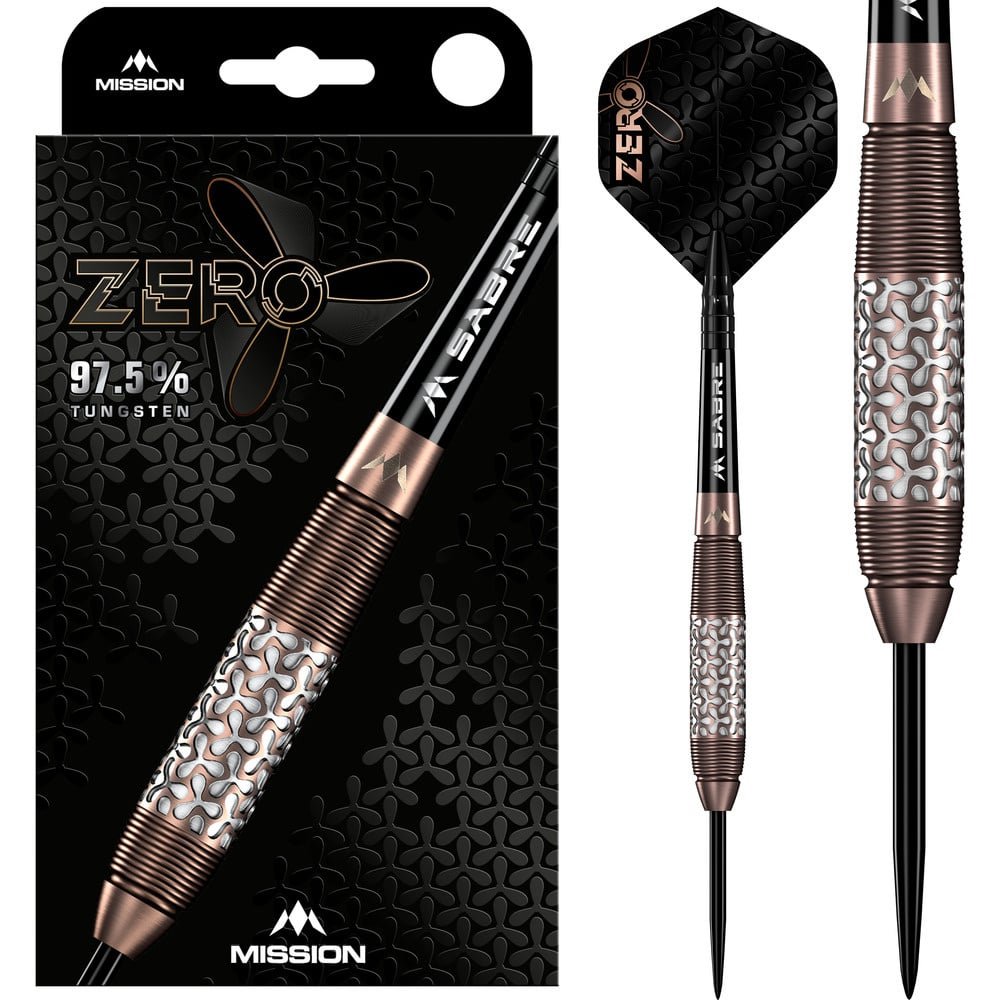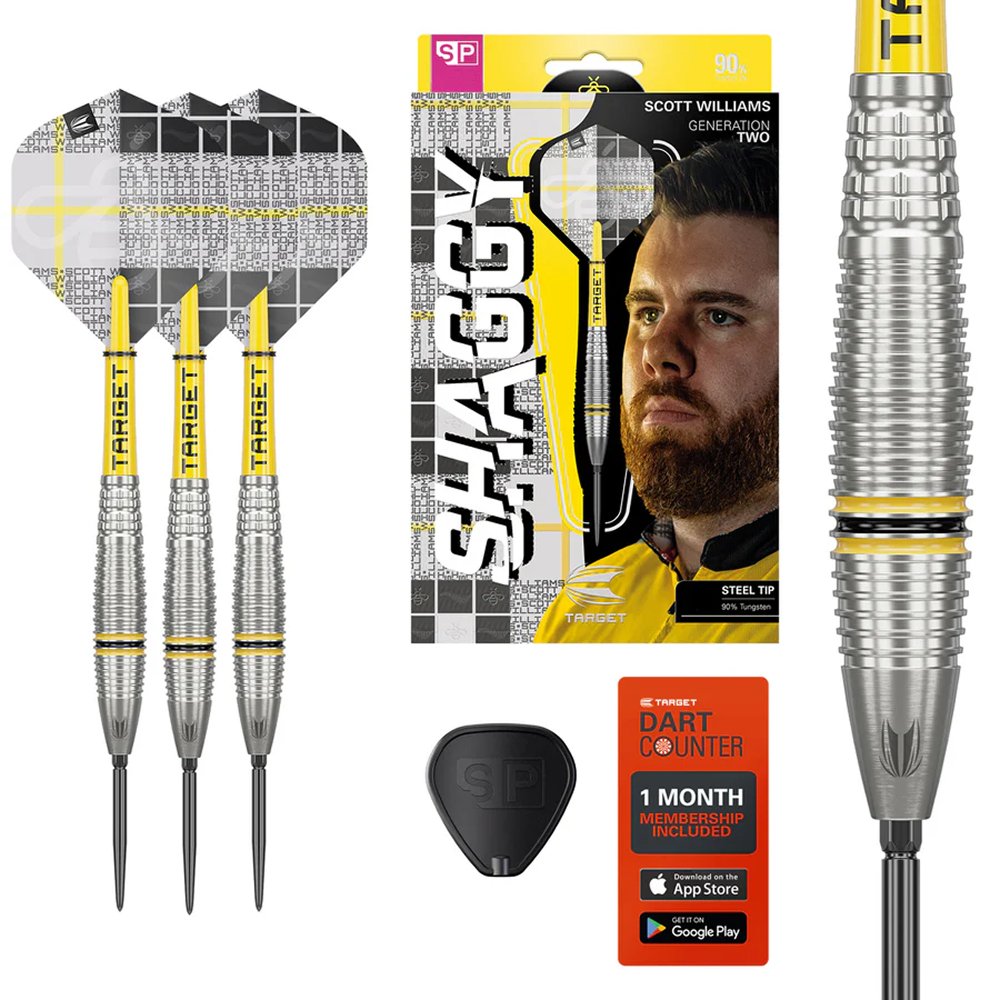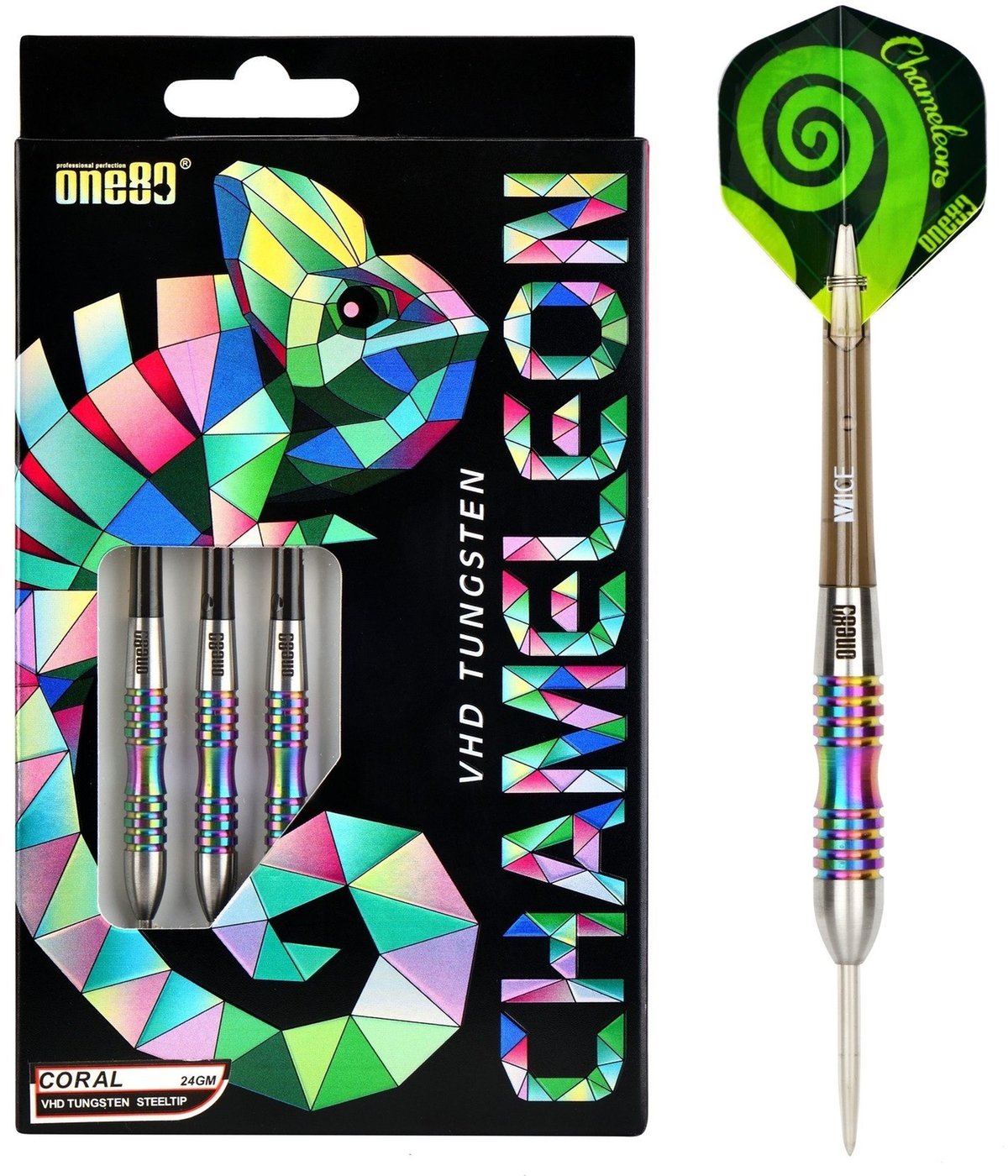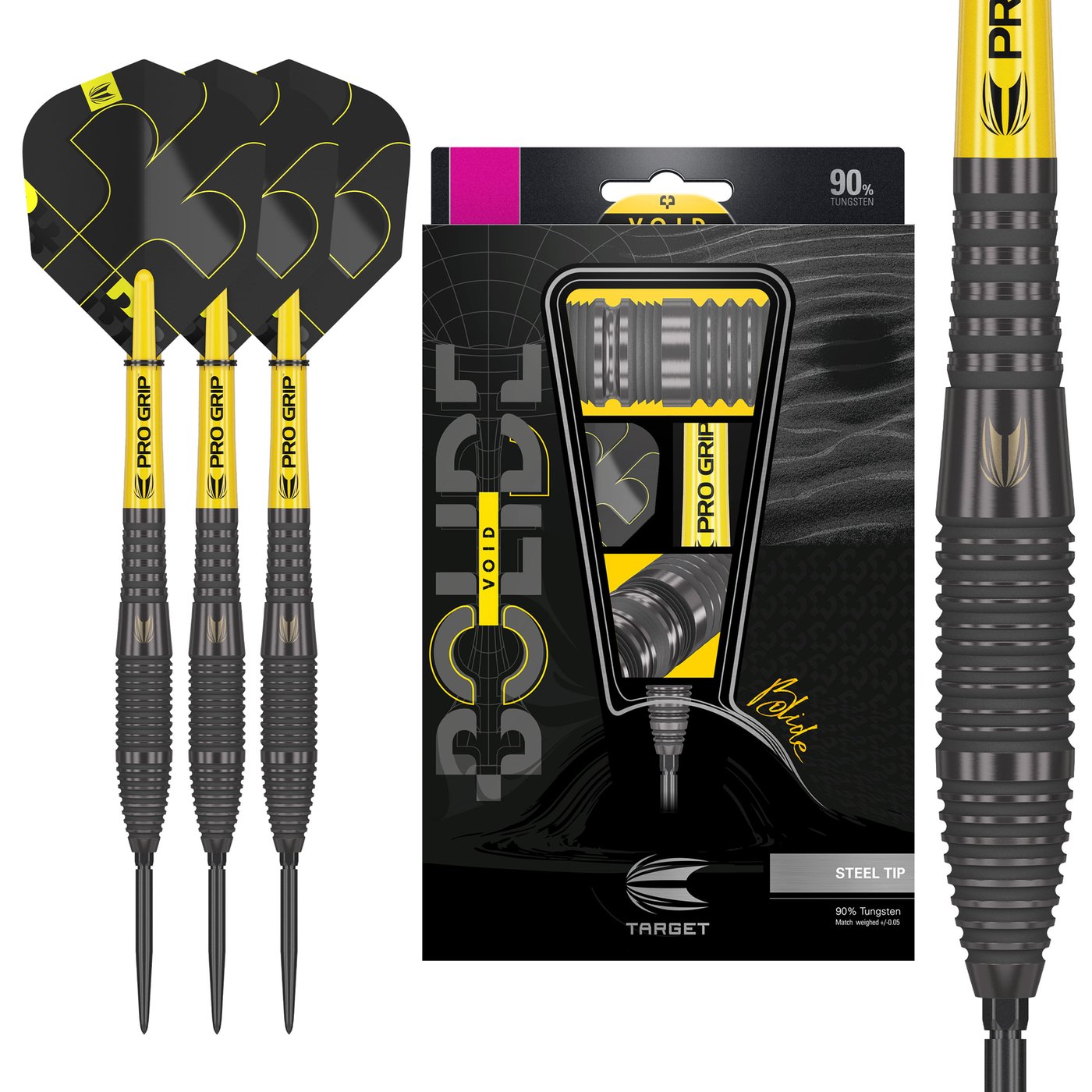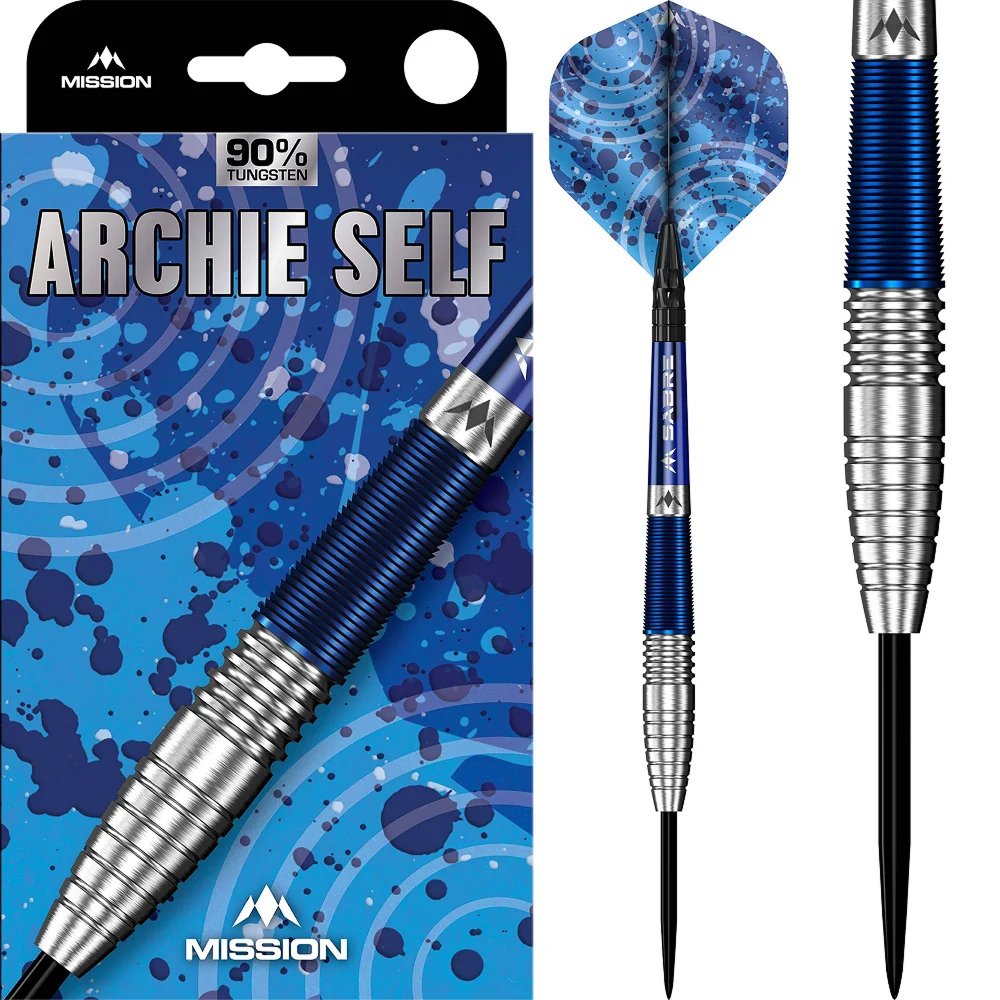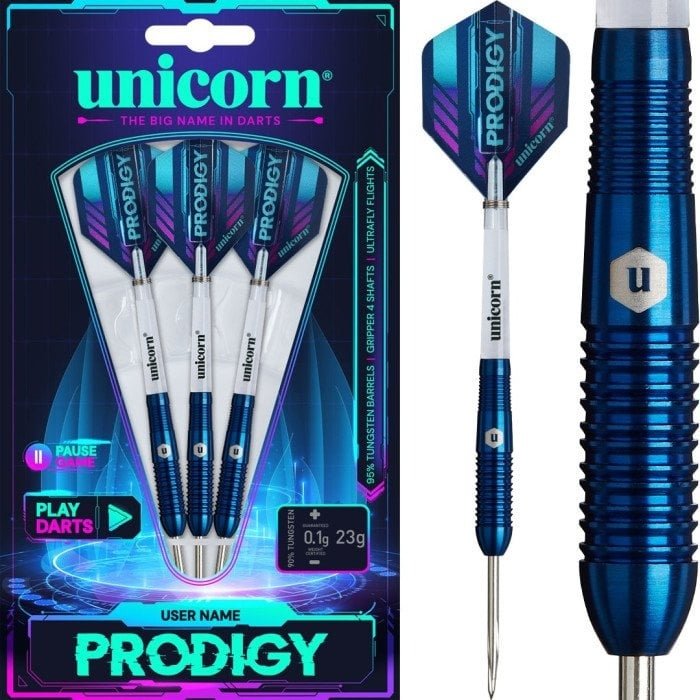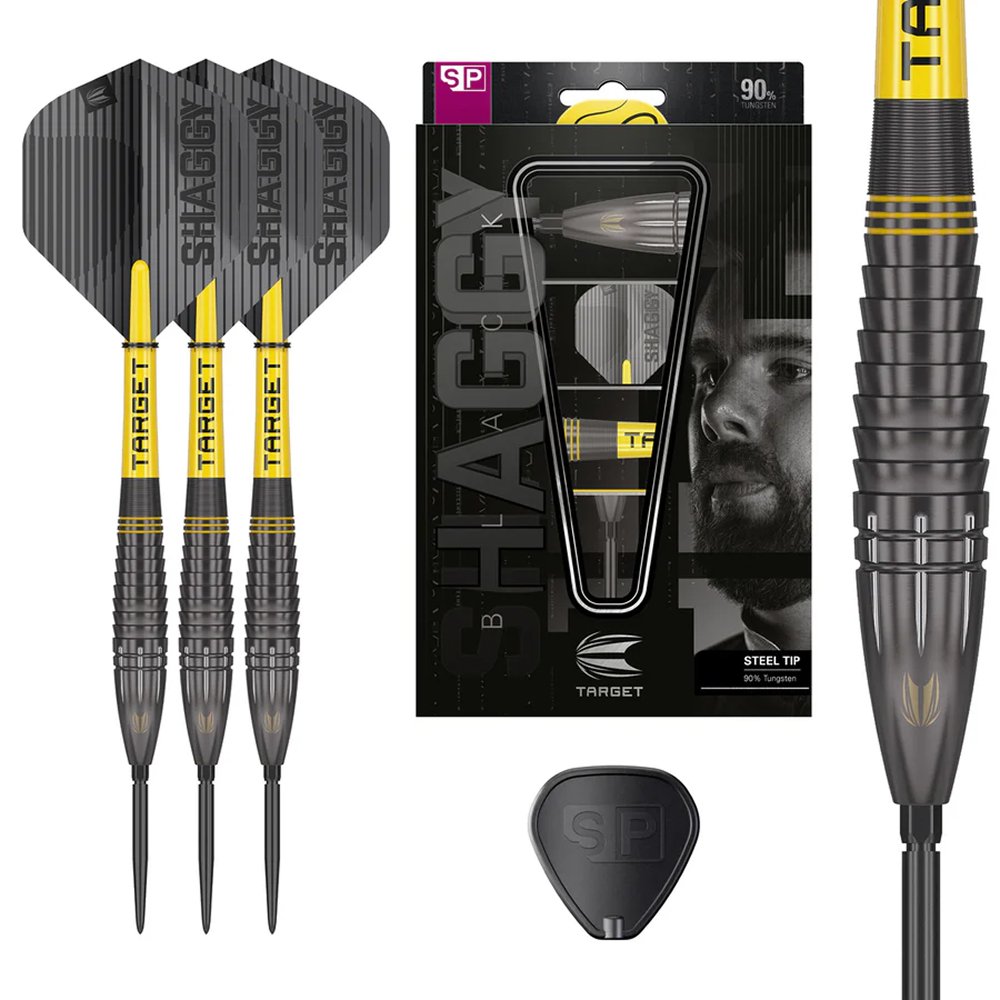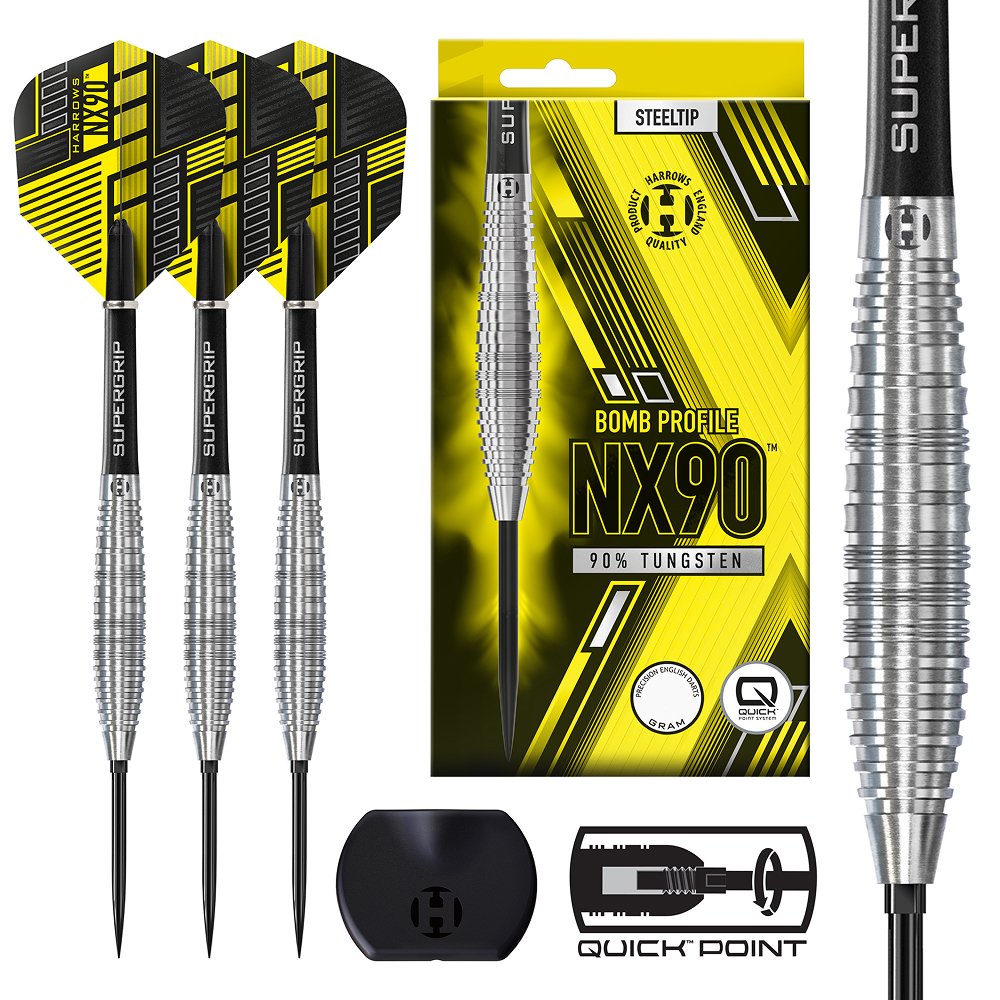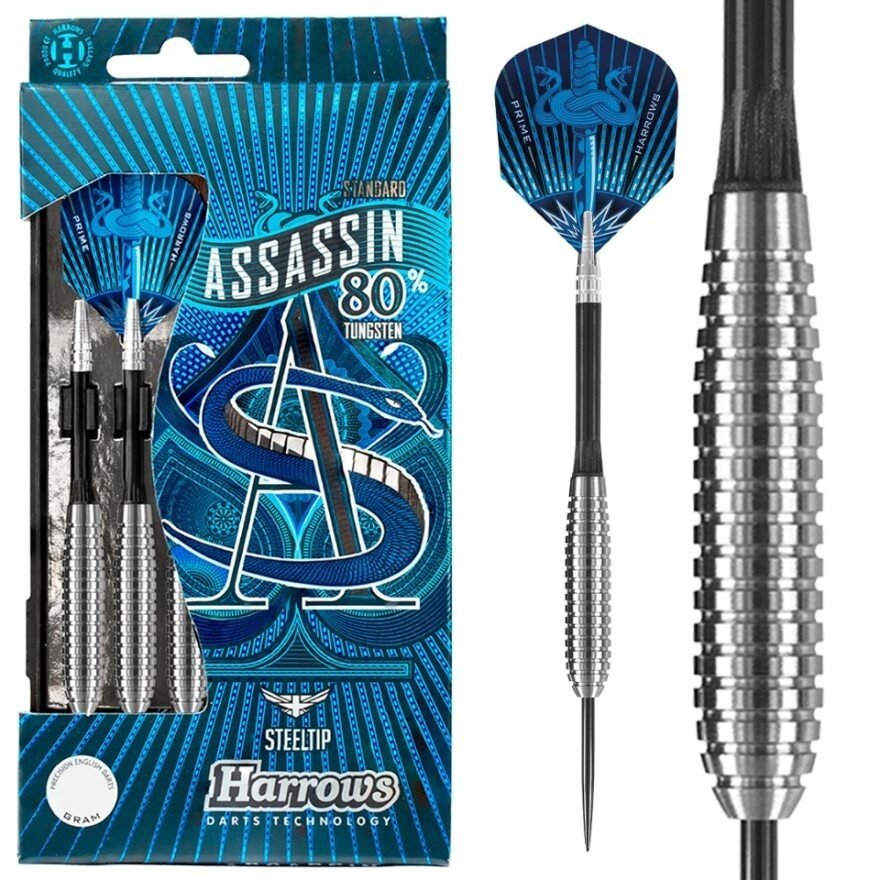




















A good dart matches your level, your throw and your budget. For most beginners, the right choice is a set of darts between 21 and 25 grams. In our range you will find the full spectrum: entry-level brass darts, tungsten darts in all common percentages, signature darts from the best-known professional players and everything in between, from both major brands and smaller specialists.
Three choices determine which dart works for you: the weight, the material, the shape of the barrel and how you hold the dart. Below, we explain what you need to know for each topic so you can make the best choice for your playing style. Not sure yet? Take a look at our buying guide for buying darts in every price range.
The weight mainly determines how you throw. Lighter darts require more control and suit a fast, smooth throw. Heavier darts fly more steadily and create less spread, but require more power. For beginners, 22 gram darts or 24 gram darts are almost always the right first step, because darts in this range feel natural to throw without forcing you to adjust your technique. 23 gram darts sit exactly in between and are by far the most popular choice among more advanced players. It is also the weight many signature darts are based on.
Outside that middle range, there are two directions. Players who know they have a light, fast throw can go below 22 grams, while darts players with a shorter, more powerful throw often end up above 24 grams, sometimes at 26 or 28 grams.
The material mainly determines how slim the barrel can be at the same weight. Brass darts, made from an alloy of copper and zinc, are the entry-level option: affordable, but relatively thick because the material itself is not very heavy. Tungsten is much denser, which allows the barrel to be slimmer at the same weight. This makes an immediate difference in how your three darts group on the board, simply because there is more room.
Within tungsten darts, the percentage indicates the mix ratio with other metals and therefore how slim the barrel can become. 80% tungsten is the logical next step after brass. From 90% tungsten, you enter the segment used by competitive darts players, while 95% tungsten and higher is high-end material mainly seen in signature darts from top players. Tungsten is also more durable than brass: the coating wears away less quickly.
The vast majority of the global darts circuit plays with darts from a handful of major brands. Target and Winmau are the two dominant names: Target is known for innovations such as Swiss Point interchangeable points and produces signature darts for players including Luke Littler and Phil Taylor. Winmau is the official PDC partner and the brand behind Michael van Gerwen’s MvG range. Red Dragon and Harrows are also key players, with the TX and Iceman ranges from Luke Humphries and Gerwyn Price, and a broad British range for every price level. Outside the British darts circuit, we also stock brands such as Bull's Germany, the largest German darts brand, and KOTO from the Netherlands.
Top players almost always use their own signature set, designed around their preferences for barrel shape, length and grip. For Luke Littler darts, the best-known model is the Target G1 90% Swiss Point, the 90% tungsten dart with which he became world champion twice. Michael van Gerwen darts are made by Winmau under the MvG range and are available in several versions. Other popular signature darts include the Red Dragon TX3 90% by Luke Humphries and the Iceman range by Gerwyn Price. What all these sets have in common: 90 to 95% tungsten, because at a professional throwing frequency, the difference in barrel slimness becomes decisive for grouping.
The type of dart you need depends on the dartboard you play on. For classic sisal dartboards such as the Winmau Blade 6, you need steel tip darts with a steel point. Electronic dartboards have small holes in the segments instead of sisal fibres, and for these you use lightweight soft tip darts with a plastic point. The two are not interchangeable: a steel point will damage an electronic board, and a plastic point will not stick in sisal. If in doubt, always check your dartboard’s product information.
A standard dart set consists of 3 darts, usually including shafts and flights. These shafts and flights are the parts that wear out first, especially if you throw often, so spare dart flights and dart shafts are a logical addition for anyone who plays more than recreationally. For match players, a second complete set is a smart choice, so you always have a backup with you. And if you want your barrel to last longer, look at darts with interchangeable points such as Swiss Point; you can read more about this in our guide to interchangeable dart points.
Which dart weight is best for beginners?
22 to 24 grams is the common beginner range. Lighter darts require more control, while heavier darts are more stable but harder to control with a natural throw.
What is the difference between brass and tungsten darts?
Brass is a copper-zinc alloy: cheaper, but thicker at the same weight. Tungsten is much denser, allowing the barrel to be slimmer and your darts to group better.
Which darts do top players use?
Top players almost all use 90 to 95% tungsten signature darts. Luke Littler plays with the Target G1 Prodigy and Michael van Gerwen with the Winmau MvG range.
How many darts do I need?
A standard dart set consists of 3 darts. For tournament play or regular training, a second complete set is a smart backup.
What are Swiss Point or interchangeable points?
Swiss Point and similar systems are steel points that can be replaced separately. Instead of buying a new dart when the point wears out, you only replace the point. You can read more in our guide to interchangeable dart points.